A wall is present near the entry to Libbey Park in the downtown area of Ojai. People walk past the wall most of the times without halting. If they do stop to halt, they spend some time reading names written there. There are 93 such names, counting to date, each being that of the players who played in The Ojai Tennis Tournament before winning any Grand Slam title.Bill Tilden. Arthur Ashe. Billie Jean King. Pete Sampras. Michael Chang. Tracy Austin. The Bryan twins. Jimmy Connors. Bobby Riggs. The list goes back to 1899. It keeps getting longer.
Michelle Graci, realtor to the stars, grew up knowing about The Ojai the way people who live in this valley grow up knowing about it, as background, as a fixed point on the calendar every April, as the thing that makes people who don't know Ojai look at you differently when you mention it. She brings it up with clients not because it's a selling point in any direct sense but because it says something true about what kind of place this is. A town serious enough about tennis that the oldest amateur tournament in the United States has called it home for a hundred and thirty years. That's not an accident.
How It Started
Sherman Day Thacher came to the Ojai Valley in 1887 looking to grow citrus. He started tutoring students to fund it, built a school on his 160-acre ranch, Casa de Piedra, which eventually became the Thacher School, the oldest boarding school in California still operating, and when his brother William arrived from Yale in 1895, things changed. William had been a collegiate tennis champion. He built the valley's first court on the ranch in 1892 and started teaching the game. He founded the Ojai Valley Tennis Club in 1895. A year later, twelve players showed up for the first tournament.
Twelve players. One tournament. The Ojai Valley club against the Ventura club. That's the whole thing in 1896. By 1912 it was the largest amateur tennis tournament in the country, with 272 competitors across 12 events. It kept growing from there, pausing for World War I, relocating to Los Angeles courts when fires swept through the valley in 1918, skipping four years during World War II, canceling again for COVID in 2020 and 2021, and coming back each time, as it always has, to Libbey Park in April.
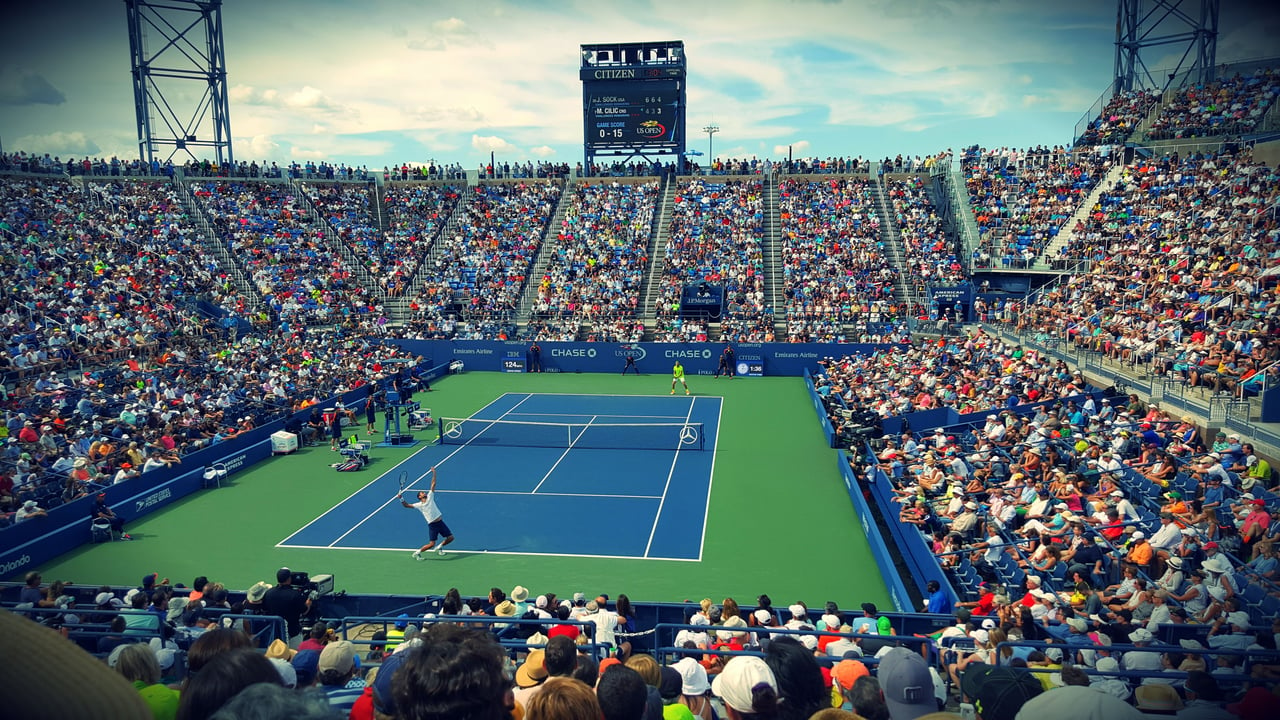
The 124th tournament was held in 2026. It saw 1,500 players in 27 categories participating in finals which took place at Libbey Park where eucalyptus and oak trees have been there since almost the beginning of the tournament. It is, by some distance, the most significant amateur tennis event in American history measured by longevity. Nothing else comes close.
The Wall of Fame
In 2000, for the occasion of the 100th tournament, the Ojai Valley Tennis Club displayed 76 names of those players on a wall outside Libbey Park who had participated in The Ojai before winning any Grand Slam title. Any one of them counted. The wall has been added to since, and a redesigned version was introduced in 2023 to make room for the names that will keep coming.
Reading through the list is a strange experience if you know tennis history. Not because the names are surprising, you'd expect to find Arthur Ashe and Pete Sampras and Billie Jean King on any list of great American players, but because of what it means that all of them came through this specific park in this specific valley before any of that happened. They were college kids, most of them. Junior players. People who hadn't yet figured out what they were going to be. Ojai was one of the places they figured it out.
Bill Tilden
Tilden played The Ojai in the early years of the twentieth century, before he became the dominant player of the 1920s and the first American man to win Wimbledon. Seven US Championship titles. The best player in the world for most of a decade. He was at Libbey Park before any of that, in the years when the tournament was still finding its shape.
Bobby Riggs
Best known, now, for losing to Billie Jean King in the 1973 Battle of the Sexes. Less remembered, maybe, is that before any of that he was one of the best players in the world, US Championship winner, Wimbledon champion, ranked number one. He played The Ojai as a junior. The valley saw him early.
Arthur Ashe
Ashe competed at The Ojai during the period he was traveling through the Southern California junior circuit in the early 1960s before winning the US Open in 1968 and later Wimbledon in 1975. The Ojai belonged to the circuit that formed serious junior players in California during that period, and Ashe was one of such players.
Tracy Austin
Austin was a Ojai regular as a junior and has come back to the tournament multiple times since. She turned pro at fourteen, won the US Open at sixteen, the youngest American to do so at the time, and the photograph that the Ojai Tournament keeps in its archives shows her celebrating a junior win at Libbey Park with Alan Rains, a local Ojai player who knew her before most people did. That photograph is worth something.
Pete Sampras
Sampras grew up in Southern California, played the junior circuit extensively before turning pro at sixteen, and came through The Ojai in those years. Fourteen Grand Slam titles followed. Seven Wimbledons. Five US Opens. At the time of his retirement he held the record for most major titles in history. His name is on the wall.
Michael Chang
Chang won the French Open in 1989 at seventeen years and three months old, still the youngest man ever to win a Grand Slam singles title. The Ojai Valley saw him as a junior. The French Open was six years later but the foundation was being built at tournaments like this one, on courts like the ones at Libbey Park, in front of the kind of small, knowledgeable crowd that The Ojai has always drawn.
Billie Jean King
King participated in The Ojai competition as she was working toward being the most prominent figure in the entire history of women's tennis with thirty-nine Grand Slams in singles, doubles, and mixed doubles competitions. The Battle of the Sexes. The founding of the Women's Tennis Association. None of that had happened yet when she was playing at Libbey Park. The Ojai saw her first.
What the Tournament Actually Is
The Ojai runs every April across multiple venues throughout the valley, Libbey Park, Thacher School, parks, private clubs, hotels, occasionally private residences, with the finals and the marquee events anchored at Libbey Park in downtown Ojai. Twenty-seven divisions. Junior players, high school players competing for CIF Southern Section titles, NCAA Division III athletes, independent college players, and now major conference championships. The 2026 tournament hosted the Big Ten Men's Tennis Championship at Libbey Park, Michigan State beat Ohio State 4–3 in a final that started at 5pm and finished just before midnight after multiple weather delays, sophomore Matthew Forbes clinching it with a third-set tiebreak 7–3. Seven hours. The fans who stayed watched MSU win their first Big Ten title since 1967. That's the kind of thing that happens at The Ojai. The Open divisions offer real prize money, equal for men and women since 2018, a meaningful move for an independent amateur open of this size, and ahead of where a lot of comparable events still were at the time.
The Tea Tent has been running since 1904. Tea poured from silver urns into actual china cups. Orange juice, freshly squeezed from Ojai Valley fruit, added in the 1930s. Cookies. It's the kind of detail that sounds quaint until you're sitting there with a cup watching a match and understand that this is what 130 years of continuity looks like in practice, not a museum piece but a living tradition that people have kept going because it's worth keeping.
Stanford coach Paul Goldstein, who competed at The Ojai and has brought his teams back as a coach for years, said it better than most: "It's not only about just the championships, but it's also this whole tennis festival. What this place has built and meant to the community, for more than 120 years, is bigger than any one of us who are coming through any one of these years." That's the thing about The Ojai. The players pass through. The tournament stays.
What It Means If You're Buying Here
Michelle doesn't lead with the tennis when she's talking to clients about Ojai. It comes up naturally, the way things that are genuinely embedded in a place tend to come up. Someone asks what the town does in April. Someone notices the courts at Libbey Park. Someone mentions that their kid plays.
What she tells them is this: a town that has hosted the same tennis tournament since 1896 through two world wars, fires, a cattle disease outbreak, and a pandemic is a town with a particular relationship to its own identity. It knows what it is. It doesn't need to reinvent itself every decade or chase whatever California town is having its moment. The Ojai Tennis Tournament is one piece of that, but it's a revealing piece. It shows you something about the depth of the roots here and why the people who land in this valley tend to stay.
The Wall of Fame at Libbey Park is worth stopping at. Ninety-three names. All of them were here before they were famous, on the same courts, in the same April light. If you want to know what's available in Ojai right now, reach out to Michelle. That part is her job.